
Goa Buyer Guide | 2026
RERA Exemption for Small Projects in Goa
"Is it RERA registered?" is usually the first question a careful buyer asks. For small projects the honest answer is often "no, and it does not need to be". This guide explains the eight-unit rule behind that answer, how Goa applies it, and what you should check instead.
The information here is general and is not legal advice. Have your own lawyer confirm the position for any specific property.
Goa-based developer since 2012
|
Small, standalone projects
|
Documents shared on request
What the Act Actually Says
The Real Estate (Regulation and Development) Act, 2016 requires promoters to register a project with the state authority before advertising, marketing or selling any unit in it. Section 3(2) then lists the projects that do not need registration.
The exemption most relevant to small projects is Section 3(2)(a). Registration is not required where:
- the area of land proposed to be developed does not exceed five hundred square metres, or
- the number of apartments proposed to be developed does not exceed eight, inclusive of all phases.
Two further exemptions sit alongside it: projects that had already received a completion certificate when the Act came into force, and renovation, repair or redevelopment work that involves no marketing, advertising or new allotment. The Act also allows a state government to lower the 500 square metre or eight-unit limits by notification, which is why the position should always be read against the rules of the state you are buying in.
A project inside these limits is not breaking any rule by being unregistered. It is simply outside the registration requirement, in the same way a small business can sit below a tax threshold.
How Goa Reads the Rule
The two conditions are joined by "or", and how that word is read decides whether a project is exempt.
The Goa Real Estate Regulatory Authority treats the two conditions as alternatives. A project becomes registrable in Goa when it is on more than 500 square metres and has more than eight units. Meeting either limit is enough to stay outside registration. Maharashtra and Odisha take the same reading, and the Madras High Court has held that "or" in this section is to be read disjunctively, so satisfying one condition is sufficient.
Not every state agrees. Authorities in Delhi, Tamil Nadu, Telangana, Rajasthan and Bihar have taken the stricter view that crossing either limit triggers registration. Guides written for those markets will tell you a project on a larger plot must register even if it has only a handful of homes. That is not how Goa applies the rule, but it is why the same question can get different answers in different states.
What This Means in Practice
Small villa projects are usually exempt
A gated enclave of a few row villas on a plot larger than 500 square metres is exempt in Goa because of its unit count.
Larger layouts are not
A community of dozens of homes on a large plot must register, whatever it is called or however it is phased.
Exempt does not mean unchecked
The approvals, title and agreement still exist and can still be reviewed. The checking simply moves from the regulator to you.
Phases, Communities and Standalone Approvals
The words "inclusive of all phases" exist to stop a large project being carved into exempt pieces.
Sixteen units cannot be marketed as two exempt projects of eight. The limit is applied to the project as approved, across every phase it is built in. A project of eight homes built in two phases of four is still eight homes and stays within the limit, because the phasing changes the construction sequence, not the size of the project.
The harder case is a small project inside a larger community. If the small project is legally a phase of the larger one, the larger one's unit count applies and the exemption falls away. If the small project has its own approval on its own plot, it is assessed on its own numbers, even when it shares roads, gates and amenities with the community around it.
So the question to ask is not only "how many units?" but "how many units on the approval that covers this plot?" The sanctioned plan answers both.
What to Check When There Is No RERA Number
Registration gives a buyer a complaint forum, escrow rules and disclosure duties. Without it, these checks do the same work.
- Ask for the sanctioned plan and construction licence for the plot, and confirm the unit count on it matches what is being sold.
- Review the title documents and the survey record so the plot being built on is the plot being sold to you.
- Read the agreement for sale for the payment schedule, what each instalment is tied to, and the handover terms.
- Confirm what is included in the price and what is extra, particularly fittings, utilities and community charges.
- Look at the developer's completed projects and speak to owners in them. A delivered record is the strongest signal an exempt project can offer.
Signs a Small Project Is Being Run Properly
Documents arrive without a chase
A developer who sends the approval pack on request is showing you the same thing a RERA listing would.
Construction status is stated plainly
Which phase is being built, how many homes are in it and what is planned next should be written down, not implied.
No pressure on timelines
A possession window offered for a specific villa is more credible than a date printed for the whole project.
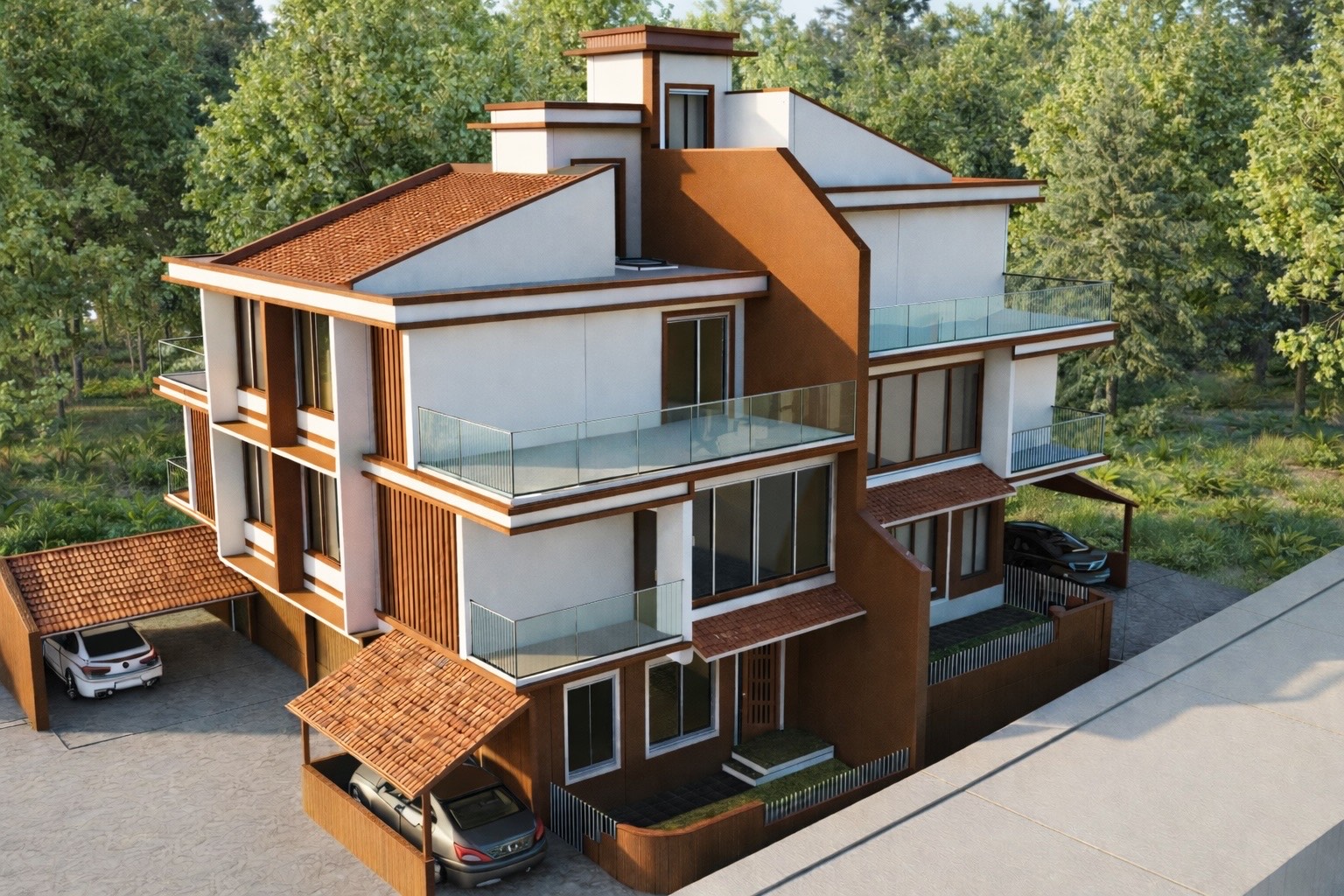
How This Applies to Orchid Villas
Orchid Villas is a worked example of the rule rather than an exception to it.
- Eight 3 BHK row villas in total, which is the exemption limit exactly.
- A standalone approval on its own plot within the Svedam community, so the count is Orchid's own.
- Built in two phases of four. Phase one is under construction now; the total across both phases stays at eight.
- Approvals, title papers and the agreement format are shared on request, and the developer's completed projects are listed on this site.
FAQ
Which projects are exempt from RERA registration in India?
Under Section 3(2) of the Real Estate (Regulation and Development) Act, 2016, a project does not need registration if the land to be developed does not exceed 500 square metres or the number of apartments does not exceed eight, counted across all phases. Projects that already had a completion certificate when the Act commenced, and pure renovation or repair work that involves no new sale or allotment, are also exempt.
Does a small project in Goa need RERA registration if the plot is over 500 square metres?
Not if it has eight units or fewer. The Goa authority reads the two conditions as alternatives, so meeting either one is enough, and the Madras High Court has read the word "or" the same way. Some other state authorities take the stricter view that crossing either limit triggers registration, which is why the answer can differ outside Goa.
Can a builder split a project into phases to stay under eight units?
No. The eight-unit limit is counted inclusive of all phases of the same project, so a sixteen-unit project cannot be presented as two exempt halves. A project built in two phases of four is still eight units and remains within the limit. What matters is the project as approved, which is why a standalone approval on its own plot is the thing to check.
What protection do I lose when a project is RERA-exempt?
You cannot file a complaint with the regulatory authority, and the promoter is not bound by the escrow, disclosure and possession-date obligations that registered projects carry. Your protection comes instead from the approvals, the title, the terms of your agreement and the developer's record, all of which you can and should check before you commit.
Is Orchid Villas RERA-registered?
No, and it is not required to be. Orchid Villas is a standalone project of eight villas on its own approved plot within the Svedam community in Marcela. It is built in two phases of four, which is still eight units in total, so it sits within the exemption on its own approval rather than as a phase of anything larger.
Want to see the approvals before you visit?
Ask for the Orchid Villas approval pack and we will send the sanctioned plan, the unit count on it and the agreement format, so you can check the exemption for yourself before booking a site visit.